Factory direct from China · Free samples within 48 hours · Response time < 2 hours EMAIL: sales@PLASTICPACKAGINGCHINA.com WhatsApp +8618335151382
PP Bottle Manufacturer in China — Heat-Resistant Polypropylene Packaging
Specialized PP bottle manufacturer serving 250 brands across 40 countries. Hot-fill capable up to 121°C, microwave-safe, autoclave-sterilizable. The packaging standard for hot-filled sauces, sports water bottles, kitchen containers, and pharmaceutical products. FDA 21 CFR 177.1520 compliant.
PP Plastic Packaging
The Leading PP Bottle Manufacturer in China for Hot-Fill and Heat-Critical Brands
Introduction
PP, or Polypropylene, is the heat-resistance champion of commodity plastics. It powers Heinz ketchup hot-filled bottles, Hellmann's mayonnaise jars, Tupperware and Rubbermaid reusable food containers, Gerber baby food packaging, and the vast majority of microwave-safe and autoclave-sterilizable consumer packaging on global shelves. Heat-resistant to 121°C, microwave-safe, chemically tough, and 100% recyclable — PP is the material every brand reaches for when temperature performance and chemical resistance both matter.
For 15 years, PureForm Pack has built its reputation as a specialized PP bottle manufacturer in China, producing over 180 million PP bottles and jars annually for international brands across 40 countries. Our PP operations cover the full spectrum from small 50ml condiment bottles to 5-liter food storage containers, from clear PP to natural PP to fully Pantone-matched colored PP.
What makes us different is depth, not breadth. We focus on two PP manufacturing processes (injection molding for precision parts and extrusion blow molding for hollow containers), chemical compatibility testing for acids, bases, alcohols, and high-temperature formulas, and full regulatory compliance (FDA, EU 10/2011, REACH, USP Class VI for pharmaceutical applications). Combined with our location 90 minutes from the Port of Tianjin, we deliver PP packaging to US East Coast and EU buyers faster than South China factories.
PP Properties
Why Heat-Critical Brands Choose PP Packaging
PP combines six critical properties that make it the dominant plastic for hot-fill and heat-resistant applications. Understanding each helps you select the right material for your product.
🔥
Heat Resistance to 121°C
The highest heat resistance of any commodity plastic. Withstands hot-fill, autoclave sterilization, and microwave heating without deforming. Essential for hot-packed foods and sterilized products.
📡
Microwave Safe
The only common packaging plastic safe for microwave heating. Withstands repeated microwave cycles without leaching chemicals, melting, or deforming. The standard for microwaveable meal trays.
⚗️
Superior Acid and Base Resistance
Excellent resistance to strong acids, bases, and most organic solvents. Outperforms HDPE and PET against aggressive chemicals. Ideal for acidic foods, vinegar, citric products, and alkali cleaners.
🔄
Fatigue Resistance
Outstanding fatigue resistance — can flex thousands of times without cracking. The reason hinged caps, flip-tops, and snap-fit closures are always made from PP. Lasts the life of reusable products.
🛡️
BPA-Free Safety
PP contains no BPA, BPS, or phthalates. FDA-approved for direct food contact and baby products. The preferred plastic for baby bottles, sippy cups, and infant feeding products globally.
🪶
Lightest Common Plastic
Lowest density of any commodity plastic at 0.90 g/cm³. PP packaging is lighter than HDPE or PET, reducing shipping costs and carbon footprint for the same volume of product.
Understanding PP as a Packaging Material
PP Technical Deep Dive
What is PP (Polypropylene)?
PP is a thermoplastic polymer made from propylene gas through a polymerization process. First commercialized in 1957 by Italian chemist Giulio Natta (who won the Nobel Prize for his work on stereoregular polymers), PP quickly became one of the world's most versatile and widely produced plastics.
PP exists in three crystalline forms: isotactic (the standard form, with methyl groups on the same side, giving it strength and crystallinity), syndiotactic (alternating methyl groups, used for specialty films), and atactic (random methyl groups, soft and amorphous). 95% of commercial PP is isotactic — this is what we use in packaging.
PP is identified by the resin identification code "5" inside the triangular recycling symbol — increasingly recycled in major markets as recycling infrastructure expands beyond PET and HDPE.
A complete technical overview of PP chemistry, manufacturing, and performance characteristics — for buyers who want to make informed material decisions.
PP Performance Characteristics
PP's properties make it uniquely suited to hot-fill and heat-critical packaging:
Density: 0.90 g/cm³ (lightest common plastic — floats on water)
Tensile strength: 30-40 MPa
Melting temperature (Tm): 160-175°C
Maximum continuous service temperature: 100°C
Short-term peak temperature: 121°C (autoclave compatible)
Minimum service temperature: -10°C (limited cold flexibility)
Chemical compatibility: Excellent with acids, bases, and most organic solvents
PP Manufacturing Chemistry
PP production starts with propylene monomer, which polymerizes using metal catalysts (Ziegler-Natta or metallocene). The resulting resin pellets are then processed through:
Injection molding for caps, closures, and precision containers
Extrusion blow molding (EBM) for hollow bottles and jars
Injection stretch blow molding (ISBM) for clarified PP bottles
Thermoforming for meal trays, cups, and food containers
For premium clarity, clarified PP uses nucleating agents that produce smaller crystal structures, creating a near-transparent appearance similar to PET while retaining PP's heat resistance. This is the technology behind Tupperware-style clear food storage containers.
PP Limitations to Understand
PP is not the best choice for every application. Key limitations:
Cold brittleness: becomes brittle below 0°C — not ideal for freezer storage or cold-climate transit without modification
Standard PP has limited clarity: opaque to semi-translucent by default (use clarified PP or PET for transparency)
UV sensitivity: degrades under UV light without stabilizers — exterior use requires UV-stabilized PP
Lower gas barrier: permeable to oxygen — not suitable for long-shelf-life oxygen-sensitive products without coatings
Stress whitening: can develop whitish marks under stress or flex — usually cosmetic, not structural
For products requiring crystal clarity, PET or clarified PP are better choices. For applications below freezing, HDPE offers better cold-temperature performance. For premium feel, PETG excels. Our material engineers help match the right resin to your specific formula and process requirements.
Material Comparison
PP vs PET vs HDPE vs PETG — Complete Comparison
The four most common plastic packaging materials compared side-by-side. Understand which material is optimal for your specific product, brand positioning, and budget.
Quick Material Selection Guide
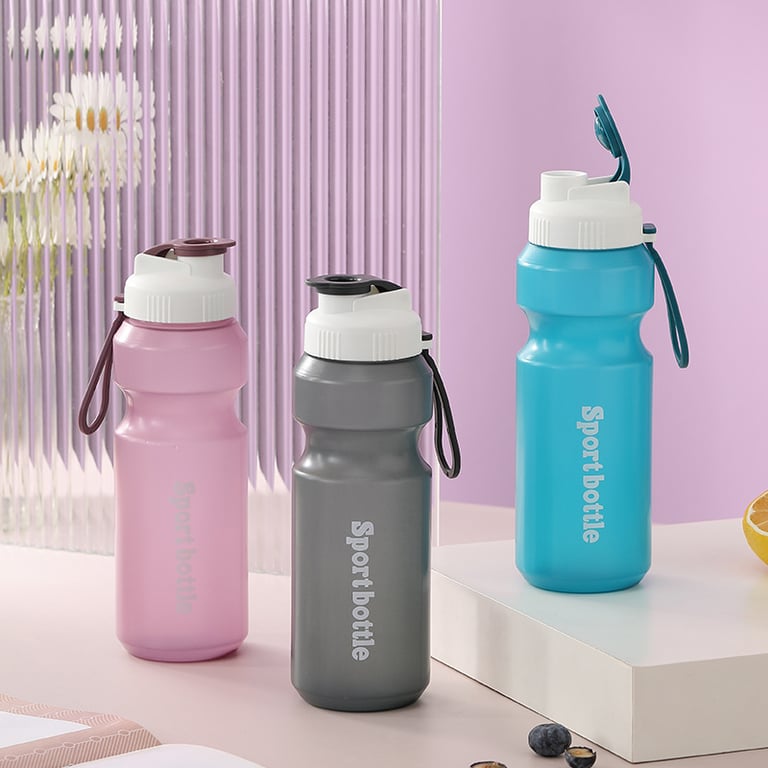
Choose PP when: you need hot-fill capability, microwave compatibility, autoclave sterilization, or maximum acid and base resistance. Best for hot-filled sauces, ketchup bottles, microwaveable meal containers, sports water bottles, pharmaceutical bottles, and baby feeding products.
Choose PET when: you need crystal clarity, lightweight construction, gas barrier for carbonated products, or premium brand visibility. Best for water, juice, soft drinks, premium cosmetics, supplement bottles, and personal care.
Choose HDPE when: you need chemical resistance, opaque finish, or softer flex bottles. Best for detergent, shampoo, conditioner, household cleaners, and most supplement bottles.
Choose PETG when: you need glass-like premium feel without the breakage risk or weight. Best for luxury cosmetic bottles, premium perfume, and high-end serum bottles where glass-feel matters.
PP Bottle Buyer's FAQ
Frequently Asked Questions
What is PP plastic used for?
PP (Polypropylene) is the heat-resistant champion among packaging plastics. It is used for hot-filled sauces, ketchup bottles, syrup bottles, microwave-safe food containers, yogurt cups, sports water bottles, kitchen storage containers, supplement bottles, and pharmaceutical packaging. PP offers excellent heat resistance up to 121°C, microwave compatibility, autoclavable sterilization, and the best fatigue resistance of any commodity plastic — ideal for hinged caps and reusable products.
Is PP safe for food and microwave use?
Yes. PP is FDA-approved for food contact under FDA 21 CFR 177.1520 and EU 10/2011. It is BPA-free, BPS-free, and phthalate-free. PP is the only common plastic safe for microwave heating — it withstands repeated microwave cycles without leaching chemicals or deforming. PP is the standard for reusable food containers, microwaveable meal trays, and baby feeding products.
What is the difference between PP and HDPE?
PP withstands much higher temperatures (up to 121°C vs HDPE's 100°C), is microwave-safe, more resistant to acids and bases, and has better fatigue resistance for hinged products. HDPE is more flexible and squeezable, slightly less expensive, and better for cold storage. PP is the choice for hot-fill, microwave, and autoclave applications; HDPE is the choice for room-temperature household and chemical products.
Can PP bottles be hot-filled and autoclaved?
Yes. PP is one of the few plastics that withstands true hot-fill applications. It maintains structural integrity at fill temperatures up to 100°C continuous and short-term exposure up to 121°C, making it suitable for hot-packed sauces, sterilized products, and autoclave sterilization cycles. PP is the global standard for hot-fill food and pharmaceutical packaging.
What is clarified PP and when should I use it?
Clarified PP uses nucleating agents during manufacturing to produce smaller crystal structures, creating a near-transparent appearance similar to PET while retaining PP's heat resistance. It's the technology behind Tupperware-style clear food storage containers. Use clarified PP when you need both transparency and hot-fill capability — for example, clear microwaveable containers, premium kitchen storage, or clear sports water bottles.
What is the MOQ for custom PP bottles?
Standard MOQ is 5,000 pieces per SKU for stock PP bottles and jars. Custom molded designs require 10,000 pieces or more. Custom decoration adds minimal MOQ impact when paired with bottle order. We support startup brands with flexible MOQs on selected SKUs — contact our sales team for current stock and special pricing.
Is PP suitable for cold storage and freezing?
Standard PP becomes brittle below 0°C and is not ideal for freezer storage or extreme cold-climate transit. For frozen food applications, HDPE or impact-modified PP copolymer grades work better. If your product cycles between freezer and microwave (frozen meals), we recommend impact-modified PP grades which maintain flexibility down to -20°C while keeping PP's microwave compatibility.
What is the typical lead time for PP bottle orders?
Stock PP bottles: 15-20 days production. Custom molded designs: 30-45 days including mold making. Custom decoration adds 5-10 days. Shipping adds 25-40 days FOB Tianjin to most international destinations. Total order-to-warehouse: 40-95 days depending on customization complexity.
Ready to Source PP Bottles?
Get a free detailed quote within 24 hours. Free samples available within 48 hours. As a specialized PP bottle manufacturer in China, we make sourcing fast, FDA-compliant, and heat-validated for hot-fill and heat-critical brands.
By Application
Leading plastic packaging manufacturer in China specializing in food, pharmaceutical, cosmetic and household bottles. FDA & ISO certified. Serving 500+ global brands since 2009.
© 2025. All rights reserved.
Factory: Cangzhou,Hebei, China
Email: sales@plasticpackagingchina.com
Phone: +8618335151382
WhatsApp / WeChat: +86 183 3515 1382
Tritan Sports Bottles